
What Do Jackson Pollock and AI Have in Common?
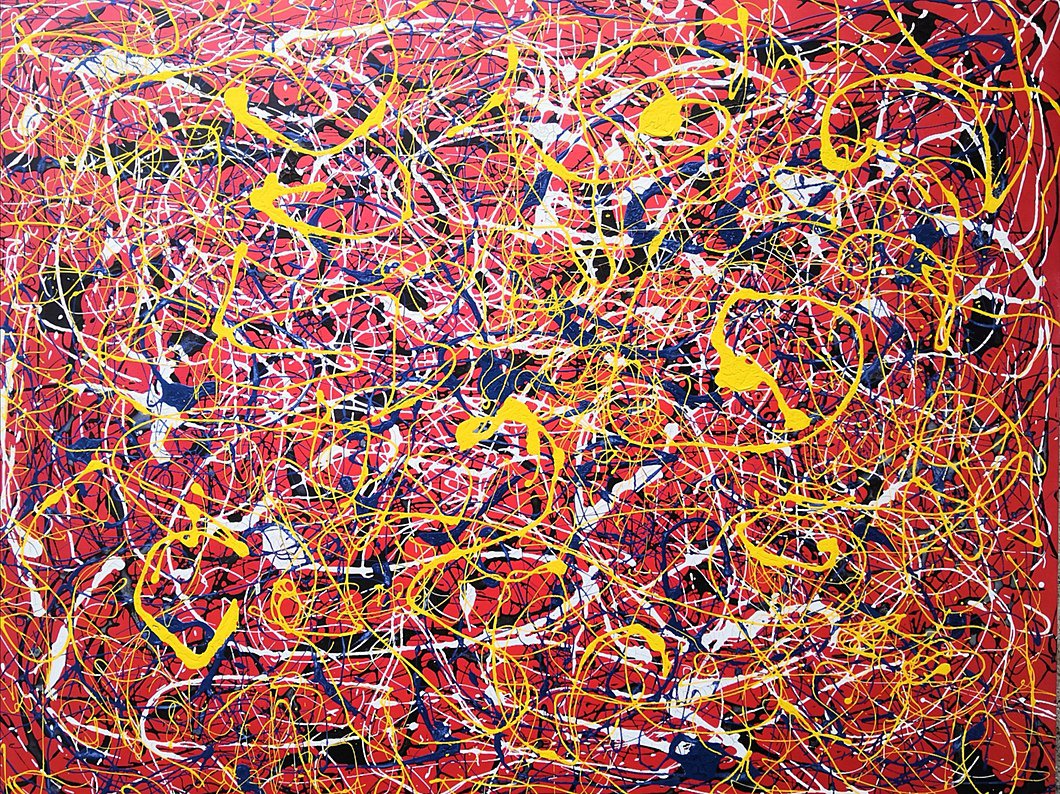
Imagine this: Jackson Pollock, with his famous drip painting technique, splattering paint across a canvas. At first glance, his art might look like a random mess of color. But when you look closer, there’s intention behind every drop—Pollock chose the colors, the layers, the texture, and even used his own body movements to create something uniquely his. Now, compare that to AI-generated content. How much of the “art” comes from human creativity, and how much is just the machine doing its thing? That’s exactly what the latest copyright debates are grappling with.
n
In their latest report, the U.S. Copyright Office drew parallels between Pollock’s method and other forms of creativity, like nature photography. For example, a wildlife photo snapped by a stationary camera might still be eligible for copyright protection, even if the photographer couldn’t control when a deer wandered into the frame. Why? Because the photographer still chose the angle, speed, lighting, and other key elements. The key takeaway: some randomness in the creative process is okay, as long as there’s enough human control.
n
But here’s the twist: AI-generated works don’t fit neatly into this framework. While Pollock and photographers are actively making creative decisions, AI is just following instructions—sometimes minimal prompts—with the machine doing most of the heavy lifting. This brings us to the million-dollar question: who gets credit for the final product when the human’s role is limited?
n
n
How Different Countries See AI and Copyright
Let’s take a global tour to see how copyright laws are handling this tricky issue:
n
UNITED STATES
In the U.S., copyright protection hinges on significant human contribution. If you’re using AI as a tool—choosing specific inputs, tweaking outputs, or adding your personal touch to the result—your work might qualify for protection. But if you just type a simple prompt and let the AI do the rest? Sorry, no copyright for you. The Copyright Office is keeping a close eye on how this evolves and plans to release more guidelines as technology advances.
n
SOUTH KOREA
South Korea’s stance is clear: only humans can be authors. AI-generated works can’t be copyrighted unless a human has significantly modified the output. For example, rearranging or editing AI-generated elements creatively might earn you some protection, but the AI’s raw output? Not happening.
n
JAPAN
Japan evaluates AI-generated works on a case-by-case basis, considering factors like the complexity of prompts, the number of generation attempts, and any human adjustments made afterward. The more effort you put into guiding and refining the AI, the better your chances of claiming copyright.
n
CHINA
China has taken a bold step by recognizing that certain AI-generated works can qualify for copyright if there’s enough human involvement. In one case, a user provided over 150 prompts and made extensive edits to an AI-generated image, proving that the final product reflected their intellectual effort.
n
EUROPEAN UNION
In the EU, the consensus is that AI-generated works can only be copyrighted if there’s significant human input in the creative process. Fully AI-generated content? No dice. The author must be a natural person, period.
n
UNITED KINGDOM
The UK has a unique law that protects works “generated by computer” when there’s no human author. However, this rule predates modern AI and is under review. For now, if you orchestrate the process, you might still claim some rights.
n
CANADA AND AUSTRALIA
Both countries are in limbo. They acknowledge the growing role of AI but haven’t clarified how it fits into their copyright frameworks. Consultations are ongoing, but no major changes have been made yet.
n
Where Does This Leave Creators?
Here’s the bottom line: around the world, the general consensus is that human authorship remains essential for copyright protection. However, the level of human involvement required varies. In some places, like the U.S. and EU, it’s about showing you made meaningful creative decisions. In others, like South Korea, it’s all or nothing—you either contribute creatively, or the work isn’t protected.
For creators in the audiovisual industry, this means treading carefully. If you’re using AI, make sure your role goes beyond just typing prompts. Add your unique touch, refine the output, and document your creative process. As laws evolve, staying informed will be key to protecting your rights.
n
Final Thoughts
Just like Jackson Pollock’s controlled chaos on a canvas, AI offers incredible opportunities for creativity—but it also raises tough questions about authorship and ownership. While the rules are still being written, one thing is clear: the human touch matters. So, if you’re diving into AI-generated projects, don’t forget to leave your creative fingerprints all over them.
 W.ARE.O
Deja un comentario